Showing posts with label Best of 11. Show all posts

Sunday, April 22, 2012

(My) Best of 2011: Picture

10. Meek's Cutoff

Kelly Reichardt's revisionist Western was the greatest political movie of 2011. Combining post-feminist theories with a clear questioning of the Obama administration, the film used a historical event to sketch a very accurate portrait of the current state of America. Bruce Greenwood gives a brilliant performance as the charming Stephen Meek, a pioneering explorer leading three families to new territories, who refuses to acknowledge the fact that he has lost his way and is dragging them along to perdition. The film's ambiguous finale, made all the more fascinating because it happened due to budget problems, actually works as an unintentional but poignant reflection of a world economy that is making freedom of expression a luxury.

9. The Tree of Life

For decades, Terrence Malick has been one of the very few working artists who has proved to be in utter and complete awe of our planet and its creation. Instead of following the path of other filmmakers who more and more try to conceal their characters from nature or others who altogether decide to move their stories to different planets, Malick preserves an utmost spirit of wonderment. He is fascinated with the process of "creation" which usually gives his movies a Christian feel. However, in The Tree of Life he reminds us that atonement has little to do with organized religion and more with unity, at-one-ment. His movie might seem like a dream comprised of dinosaurs, abusive parents and traumas, but judging from the way in which one reacts to it, it's more similar to mystical ecstasy than facile psychology.

8. Drive

Nicolas Winding Refn's neon-noir work of art was a refreshing take on the mythical figure of the American cowboy, who has now moved to the city and remains as mysterious and unbreakable as ever. The visionary director makes his hero, a questionable figure who has to deal with common things like working for a living but it still happens to be ruled by a strict moral code that separates him from other mortals. As portrayed by Ryan Gosling, the nameless Driver is a figure we can admire, fear and lust after. If Refn was trying to make a point about the way we project our desires onto others, he does it while stimulating both our intellect and injecting us with adrenaline. The action sequences in the film have a strange beauty that might not send us flying off our seats with thrills, but stir thoughts within us, similar to what modern art does. Like Mulholland Dr. the film was also a critique to the Hollywood way of life, with Refn both reveling in the artifice of Los Angeles and reveling its polished decay. With its spare dialogues and bright colors, it's as if someone loaded Tarantino on Xanax and asked him to make a 70s Clint Eastwood vehicle using Michael Mann's aesthetic sensibilities.  

7. Certified Copy

Nowadays, it's rarely a joy to encounter a movie that foregoes all notions of traditional plot in order to explore the world of ideas. Most movies that try to do this end up confusing intellectualism with bullshitting and rely on facile tricks to convince us about their intelligence. Abbas Kiarostami's Certified Copy ought to change that because it finds unbearably touching humanity in a fascinating intellectual essay. Wondering what makes something a "copy" he explores the notions of creation and recreation by using people. Kiarostami could've easily turned his characters into puppets used to channel a message, but like a generous god he provides them with a soul. If only all philosophy was this richly realized...

6. Shame

It's strange to think of it, but the one thing the characters in this movie never seem to feel is actual shame. Michael Fassbender plays a man with a destructive sexual addiction and Carey Mulligan plays his alcoholic and equally chaotic sister. The siblings live in NYC and seem to have carved a personal playground of pain under the city's stars. Other directors could've shamed their characters and reduce them to morally acceptable examples, but Steve McQueen merely observes them and lets them be. The film is filled with scenes of utmost loss and despair but they are treated with such delicate bluntness that we have no choice but to try and empathize with these people. The film's most poignant scene has the siblings watch a cartoon on TV and for a moment it seems like they've found peace. Even if it alludes to the origin of all our problems in our childhood, it also achieves a mystical connection that resembles time travel.

5. Martha Marcy May Marlene

The year's most astonishing debut had Sean Durkin revisit the dreamlike aesthetics of 70s movies while giving Elizabeth Olsen the richest female role of 2011. The film deals with the trappings of a cult and the consequences their practices have on believers. But besides pointing out the perils of submitting yourself to the will of others, the film draws a fascinating parallel line that studies fact and fiction, the way in which we are our own creators and how we can build entire worlds to fit our needs. The title protagonist isn't merely complex because she can become so many different people, she's fascinating because she evokes the never ending process of creation; we are never sure how many people she has been and how many people she will be. The film's technical achievements were unusually inventive and helped the director transmit paranoia in open spaces, making nature both a witness of our distress and an eternal perpetrator of evil.

4. The Girl with the Dragon Tattoo

Who would've guessed that director David Fincher would craft his most personal movie to date from a pulpy bestseller? The way in which he grabbed the story of hacker Lisbeth Salander and ruined journalist Mikael Blomkvist and turned it into an exhilarating conversation with god, was a perfect reminder that art was invented to connect us to what we couldn't explain. Sure, the film succeeds as a fantastic, exciting thriller (something its Swedish predecessor did with just as much efficiency but without the aesthetic grace) but it works at its best when Fincher leads us past the plot twists and points out the fact that we all hide skeletons in our closets, our collection of personal experiences becoming a cabinet of horrors and wonders alike.
That he allowed Lisbeth to dream of love speaks highly of the director's humanistic side, that just as easily he  takes illusion away from her, speaks of his ruthlessness as a creator.

3. Midnight in Paris

Woody Allen's Midnight in Paris was a surprise because it proved for once and for all, that its maker is one of the few artists blessed with the ability to rejuvenate himself when least expected. How can he keep on finding beauty in subjects he's dealt with constantly for more than four decades? How is it that his movies always seem to be about the same things and each time we find ourselves enthralled by their deep wisdom? His love song to Paris and some of his heroes is a remarkably enjoyable piece that pretty much fulfilled whoever saw it. Like enjoying a rich, perfect dessert, the film pleased and delighted without overwhelming the palate, every time it left you wanting more.

2. Melancholia

The end of the world has never been treated with the delicacy Lars von Trier presents it with in Melancholia. Coming from the ode to chaos that was Antichrist it would've been easy to assume that the director had definitely entered a period of complete darkness, for how does once descend into such hell and come back unscathed? Like mythical heroes, von Trier not only emerged from the underworld alive, he came out with a new sense of appreciation for the beauty in life. His movie about the end of the world is tragic yes, but within the deep pain portrayed by his actors and the precision of his almost operatic conduction (he finds a beauty in chaos that people like Michael Bay and Roland Emmerich only dream of  achieving) there is something breathtakingly beautiful. He does not relish in making others suffer this time, instead he seems to be for the first time looking at death right in the eyes and embracing the sense of peace found in its irreversible finality.

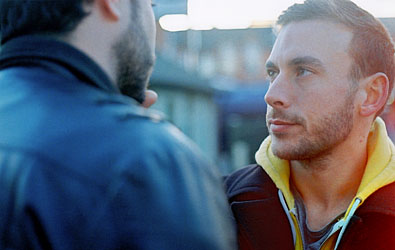
1. Weekend

There are romances with repercussions that resonate for as long as we live. Said romances usually end before we are ready to give them up. Without us being aware of the fact that we are living something that will establish a "before and after" in our existence, we then discover we revisit these moments forever and they most likely will accompany us to our deathbed. Then, there are movies that deal with these romances. Movies like Casablanca, Lost in Translation, The Way We Were, Brief Encounter...all of which talk of love that was, love that is and love that will forever be. Like said romances, we also find ourselves revisiting these movies in our dreams more often than we'd like to. Can it be that we all harbor a secretly masochist hopeless romantic within? Or is it that real life never fulfills what art promised? Both could be answers that come to mind while watching Andrew Haigh's Weekend, this miniature masterpiece is a lovely exercise in style, execution and transcendence. The way in which the director enters the lives of two men who fall in love over a weekend, is nothing if not exceptional. Haigh has such eye for detail that we have to ask ourselves if this wasn't taken straight from one of his memories, watch how lived in the spaces feel, how effortlessly the actors live within these characters...the magic in Weekend is that it doesn't really feel like a movie, it feels like we're witnessing real life, things happening right in front of us. Where it could've been political, the film forgoes the dynamics of homosexuality and instead focuses on the complexities of humanity. Instead of concentrating on representing specific concepts and conceptions, the film aims to address our hearts without forgetting our minds. If you find yourself thinking about Weekend long after you've seen it, you will understand what the characters felt. The movie sometimes becomes too painful to watch, its simplicity bordering dangerously on docudrama without reducing itself to the tackiness of reality shows. However like a failed romance, there is much more to gain from the movie, than the idea of not having it in your life. To watch this movie is to witness love itself being invented. The precision of its storytelling, a reminder that like everything else, love too must fade. The dreamlike quality of its urban spaces an invitation for us to pursue it no matter what.

Monday, April 16, 2012

(My) Best of 2011: Actress

5. Keira Knightley in Last Night

It's a true shame that Keira Knightley keeps becoming one of the finest working actresses and people don't seem to be noticing it, taking her for granted as a "has been" among the new crop of British ingenues and that itself might be her problem, Keira has always known how to infuse her characters with ages old wisdom. See her turn as Joanna in Last Night, while the movie itself sometime lingers too dangerously on being some sort of Closer redux, her performance is a complex study of the human heart. Watching her protect her marriage ferociously while being tempted by the idea of restarting an old affair, she is the epitome of a "woman". Knightley's beauty never overshadows her character's deep longings, and she never allows Joanna to descend into soap opera territory, instead she just lets the character speak through her body. Her laugh becomes a bashful flirtatious move, her elegant walk becomes an awkward attempt at shielding herself from what seem like weak moments. It's a pleasure to realize Keira is able to keep surprising us. 

4. Juliette Binoche in Certified Copy

No actress lights up the screen as effortlessly as Juliette Binoche. Whether it's the way in which she lets her characters take over her, the effervescence of her sensual smile, the added bonus that she always chooses interesting projects or just her otherworldly beauty, she always seems to possess a wisdom kept away from us mere mortals. She has that kind of quality in which she can play a "mother" and still be extremely sensual, or she can play a "sexy" woman and retain some innocence. This quality has never been reflected better than in Abbas Kiarostami's Certified Copy, where Binoche plays a charming woman having trouble with the man who might be her husband or a writer she admires (don't ask if you haven't seen it). In order to play a nameless character that could've easily fallen into being nothing but an archetype, Binoche is able to imprint her ethereal qualities on a woman that might as well be nothing but an intellectual essay.
She makes art both tangible and unreachable, always making us wonder what lies between thee fascinating layer we are watching at an established moment.

3. Kirsten Dunst in Melancholia

A wedding is supposed to bring out moments of unbridled joy but what happens when instead it becomes a culmination of a life of sorrows? Such is the case with Justine (Dunst) a woman who we gather has earned everything she wanted and is just waiting for marriage to fulfill her. During the first scenes Dunst shines with the vibrant energy she has displayed onscreen for almost two decades, her cheerleader smile lighting up everyone else, yet as the plot moves forward and Justine becomes more aware of just how unhappy she is about to become, we see a part of the actress that has rarely surfaced. She turns into a fearful, sad creature, overwhelmed by the lack of significance in her life. It should be ironic that she seems rejuvenated by the fact that the world is about to end. Dunst plays Justine like a human being ascending into the realms of sainthood. In a performance with facial expressions as beautiful and touching as Falconetti's in The Passion of Joan of Arc the actress gives one of the most touching portrayals of metaphysical ecstasy to be ever put onscreen. 

2. Rooney Mara in The Girl with the Dragon Tattoo

Taking on a role made iconic by an actress the year before, Rooney Mara seemed to have been headed for career suicide as Lisbeth Salander. However what she did was even more impressive: she delivered a performance all her own, that takes nothing from the Swedish movies made before her and seems to dig deep into the essence of the literary source. To say that Stieg Larsson's novel wasn't particularly profound would be paying it a compliment, given that it prefers to stick to plot points rather than exploring the nature of its characters. The magic in Mara's performance is all the more astonishing when you realize that she's playing a heroine that we shouldn't really be rooting for. While the previous incarnation of Lisbeth aimed for the stars, Rooney's goes for something much more earthly, she plays Salander as someone breakable. Mara reveals Lisbeth's weaknesses! Watch that scene in which her disgusting guardian touches her face, the way in which the actress' body seems to shrink like a fearful animal, or later as she takes control of her sexuality, as we watch her literally blossom in front of our eyes. Mara combines Lisbeth's childlike features with an ancient soul that's been hurt too much and now walks the Earth looking for solace, for absolution.
You don't expect to have your heart broken by a character who asks for permission to murder a man and yet that's just what she does, the most ironic of all being that her character would kick her ass for doing so.

1. Elizabeth Olsen in Martha Marcy May Marlene

Sean Durkin's directorial debut will forever be remembered for the powerhouse performance turned in by Elizabeth Olsen. Although saying a "powerhouse performance" seems to be referring to something big, loud and imposing, yet what we get instead is a purely introspective character study. Playing one woman with three different personalities, of sorts, Olsen is just breathtaking. The movie begins with her running away from what we later learn is a cult that had kept her captive. To this cult she was known as Marcy May, once hse goes back to her "normal" life, she goes by Martha, and she imprints all of these personae with different qualities; her Martha being a wild child who was always in the lookout for a deeper existence, her Marcy May being an illusion-filled girl whose crush turned into a nightmare and her Marlene being a completely fictitious creation that defines this woman's darkest intentions. Olsen is so enigmatic that the movie ends and we still have no idea if there were Marys, Mercedes, Mildreds, Marges...within her. She evokes the complexities of a Bergman heroine with the rawness of Cassavettes' characters. She is both beautiful and terrifying to watch, a mystery and its answer.

Sunday, April 15, 2012

(My) Best of 2011: Director

5. Andrew Haigh for Weekend

What Andrew Haigh does with his camera in Weekend defies the cinematic idea of intimacy, because we forever wonder: how did he get his actors to become so unaware that they were playing characters and were being filmed? Not even pornographic films, which are supposed to be chronicling moments of complete intimacy, are able to make us feel like we're invited to the party. The way in which he managed to get the equipment and crew inside Russell's (Tom Cullen) little apartment from example at some point or another would've demanded that we became aware of the limitations imposed to movement. However this never happens, all along we're meant to feel not like voyeurs but like guests. Whether Haigh invited us to make us more aware of social causes or merely because he wanted to give us a taste of what falling in love feels like, he is always leading us without us feeling directed. He finds sublimity in the subtle.


4. David Fincher for The Girl with the Dragon Tattoo

Who would've guessed that David Fincher would craft his most personal movie to date, from an international best-seller which had already been turned into a movie? His take on The Girl with the Dragon Tattoo isn't only a procedural thriller, but an open dialogue with a universe he still doesn't get. If god talked through Terrence Malick in The Tree of Life, Fincher talks through god as he wonders about the way in which the human race has turned the notion of civilization into chaos. Why are the Adams of the world so keen on destroying the essence of the Eves? Why is history so important and yet disregarded with such ease at one's convenience? Why can't nature and progress go hand in hand? Fincher shows us a dark, icy world in which humans have become nothing more but pieces of ice, awaiting a thaw that might just never arrive.


3. Woody Allen for Midnight in Paris

Not since Manhattan had Woody Allen delivered such an endlessly pleasurable work of art. You're thinking The Purple Rose of Cairo or Hannah and her Sisters, right? Yet even those dealt more strongly with deeply melancholic currents of thought. In those movies he questioned the universe, in this one he questions and then seems to find enlightenment in the lack of an answer. His previous effort was a movie that came out with harsh, bitter tones, something acceptable but that reflected awfully because for a moment it teased of a career that would go downhill from there. Perhaps Midnight in Paris resulted so successful because it was a surprise. Not everyone can grab life and find hidden gems among its every day misery in the way Woody can.


2. Sean Durkin for Martha Marcy May Marlene

Not since Joshua Marston's Maria Full of Grace had a feature length debut felt so electrifying and had such subtle "look at me" power. Is it a coincidence that both movies are commanded by strong female characters undergoing extraordinary situations? Perhaps not. The one true thing is that both debuts felt like the work of masters of the art form, only leading us to wonder, how will they ever be able to top this?


1. Lars von Trier for Melancholia

The mad Dane has done it again! After his previous movie which was an undeniable masterpiece, he might've actually gone ahead and delivered the most flawless movie of his already breathtaking oeuvre. His gorgeous Melancholia followed a pattern that was quite common in 2011 films: realizing that the world sucks, that humanity is rotten and that this might all just implode one day, but still they found something beautiful among the decay (see Drive, Midnight in Paris, The Girl with the Dragon Tattoo, Bridesmaids, Shame). What makes Melancholia different from all of these movies is that each and every frame in it shined with the sort of artistry that eludes most filmmakers for as long as they make movies. To see how Lars orchestrates chaos and turns it into a gargantuan opera conformed by sensitive, chilling arias is nothing if not mesmerizing and despite his film's tragic finale, it reassures us that if there is a god, he wouldn't want to destroy a civilization capable of creating such beauty.

Friday, April 13, 2012

(My) Best of 2011: Actor

5. Jean Dujardin in The Artist

In what unarguably became the most talked about male performance of 2011, Jean Dujardin pulled off the rare feat of actually living up to the hype around him. His suave portrayal of movie star George Valentin defied the odds because it exemplified a contradiction: it was a flawless star turn given by someone who wasn't yet a star. The entire movie relied on his magnetic personality to take us into a world movie audiences had refused to be a part of for decades. How he also happened to be moving and affecting is another miracle in a performance that as corny as it sounds, truly had it all.

4. Mel Gibson in The Beaver

It's a shame that Mel Gibson happened to give the greatest performance of his career as his public life became the center of international scrutiny, leading open minded thinkers to wonder if an artist is his art or is he a projection of audiences' wishes? To dwell on that topic for long would only take us away from celebrating Gibson's turn as Walter Black, a performance that reminded us that beyond the handsomeness, Mad Max-ness, crazy ass-ness, movie star-ness and William Wallace-ness was a true actor who could fearlessly explore the confines of the human soul. His turn as a depressed CEO feels so real that sometimes you wish you could look away. As his performance escalates towards levels of raw pain, we come to the realization that depression isn't something to be toyed with, what's even best is that Gibson does this without entering the realm of preachiness, his performance almost so true to itself that some chose to see it as his way of atoning his public sins.

3. Matthias Schoenaerts in Bullhead

You can't take your eyes off Matthias Schoenaerts in
Bullhead and in a movie where violence becomes alive in each and every scene, it's a testament to his performance that you still want to look. His turn as the damaged Jacky Vanmarsenille is fully alive with a literal kind of animal rawness. Watching him turn into a Minotaur-esque being is perplexing and fascinating because the actor embodies the animal without ever letting go of the human. As he feels something uncontrollable take over him, we watch him fightback and try to find any remains of humanity within.

2. Michael Fassbender Shame

One could call Michael Fassbender in Shame: intense, raw, brave and other similar adjectives without the slightest hint of clichéd irony. His performance as the sex-addict Brandon, is an exploration of the human soul that goes deep into the darkest confines it harbors. His performance is certainly physical and in a way evoked Christian Bale's greatest turn yet as the title American Psycho in the way they both become obsessed with material belongings and collecting (sexual partners or victims). If the film was trying to say something about the perils of our shallow times, Fassbender finds something deeper, he goes straight to the heart of addiction to remind us that every now and then there are things we can't explain. He lets his character get ugly and opens up as few actors have ever done onscreen.

1. Tom Cullen in Weekend

There is something so moving about Tom Cullen's smile, that the very thought of it might just break your heart. The way in which he uses this shy smile as Russell in Andrew Haigh's
Weekend might just have made for the most touching performance by any actor in 2011. Playing the more reserved character in a doomed romance, meant that he had to exteriorize a lot by using gestures and non-dialogue techniques. What he does so perfectly is inhabit the life of this lonely young man without turning everything into an "issue". Russell was raised in foster homes but Cullen never victimizes him, Russell is extremely reserved about his sexual orientation but Cullen doesn't turn him into an angry man. Watching him fall for Glen (Chris New) often feels like watching love being created. The way in which Cullen moves onscreen (see how easily he moves in Russell's apartment, everything feels so personal) has such effortless naturalism that when the time comes for us to see his sperm, it feels like he's allowing us into the most private moments in anyone's life. He doesn't seem to know the camera is around, but after watching him he becomes impossible to forget.

Wednesday, March 21, 2012

(My) Best of 2011: Supporting Actress

5. Jennifer Lawrence in The Beaver

Jennifer Lawrence has one of those faces made to encompass the concept of All-American Girl however she has the acting chops to subvert these very notions and turn them into enigmatic traits. Take her performance in Jodie Foster's vastly underrated work of art The Beaver, here Lawrence plays Norah, a high-school girl who also happens to be a cheerleader, valedictorian and an underground graffiti artist. While lesser actresses would've conformed with letting the character do all the work, Lawrence taps onto something great: she recognizes the deep humanity that lies beneath the seemingly perfect shell and turns Norah into the most haunting characters in an already enthralling film.

4. Jennifer Ehle in Contagion

In an ensemble piece that feels more Nashville than Gosford Park it results kind of difficult for one actor to make a more lasting impact than others, particularly when their stories barely intersect and each of them end up commanding tiny movies of their own. In the case of Contagion it would seem almost impossible to choose between the impressively moving work of Kate Winslet, the vanity free performance of  Gwyneth Paltrow or the worldly wisdom projected by the lovely Marion Cotillard and yet it's the subtle work of Jennifer Ehle that stays with you and lingers for weeks after you see the movie. Playing the part of a dedicated scientist most of her scenes are actually dialogue-free. However watching the way her Meryl Streep-ian features light up is nothing if not magical. Ehle has the kind of face that evokes Falconetti and Streep in equal measures, the camera becomes so transfixed by her ethereal beauty that she needs but to muster a smile to let us into the secrets of creation.


3. Keira Knightley in A Dangerous Method

Year after year Keira Knightley seems to be delivering astonishing work that goes by without people making a fuss about it. Why? Her work in a movie like A Dangerous Method for example would get countless actresses hyperbolic comments about their craft and such. The way in which the young actress immerses herself into the character of Sabina Spielrein proves she possesses talents that go beyond her years. The way she allows the character to possess her is almost too disturbing to watch. The way in which Sabina's inner demons surface in shocking demonic moves makes Keira look completely awful, her notorious jaw and underbite deforming her lovely features and yet out of all of this - done without prosthetic work or special effects - Keira is always able to come back and find the latent humanity in this woman. She turns in absolutely moving work and steals the show from both Michael Fassbender and Viggo Mortensen; watching her squirm with pleasure as Carl Jung (Fassbender) whips her might just send you into nervous shock.

2. Jessica Chastain in The Help

We all know Jessica Chastain had the most terrific year any actress could've ever wished for. Her presence in some of the most important pictures of 2011 turned into a recurrent joke, where everyone assumed in reality she'd literally been in every single movie. The beauty of  the Chastain effect however wasn't her perseverance but the quality of her work. She was the MVP in each of those movies she was in! She created different characters whose only common denominator was the actress playing them, other than that you could never see any of her conflicted Samantha from Take Shelter in the haunting performance she turned in The Tree of Life. However even within her flawless list of performances it was her affecting turn as Celia Foote in The Help the one which might very well become the most iconic of her short career. Filling the colorful 60's costumes and donning an outrageous blond wig, Chastain plays the ultimate ditzy blond, who moves into a town where she is hated for representing everything others only dream they could be. In a movie that takes intolerance to the front of the equation, it's her beautifully nuanced performance that comments on the way in which hatred can go beyond the confines of race, sex or religion. With the comedic timing of Judy Holliday and the whoop-dee-doop sex appeal of Marilyn Monroe, Chastain is more remarkable in quiet scenes where Celia's true persona surfaces. She might be all sunshine and smiles on the outside but we learn that she crafted this persona in order to survive in a world that would crush her without giving it a second thought.

1.Charlotte Gainsbourg in Melancholia

Lars von Trier has earned a reputation for torturing and destroying any actress who come near him. This results in quite the paradox when you see the performances he gets out of women in his films. It should mean something then - both for Lars and his ways and tough love in general - to see how Charlotte Gainsbourg has flourished under his direction. She was absolutely ravishing in Antichrist turning a performance that fearlessly dared to carry all the evil of the world upon its shoulders. Conversely her work in Melancholia seems almost saintlike. Playing Claire, the sister of depressed bride Justine (Kirsten Dunst), Gainsbourg effortlessly overcomes what could've been one of the film's biggest setbacks: the fact that no one in the family seems to be even remotely related. Instead of focusing on the differences between Claire and Justine, Gainsbourg devotes her performance to making them familiar because of the intense love they share. The way in which the actress seems to take pleasure in comforting the petite Dunst exudes warmth and a humanity unlike anything you've ever seen in a von Trier film. Even as she has to cope with her own fears and pain - after all a huge planet is about to destroy Earth - Gainsbourg gives a mature, unfathomably brave performance. She only allows Claire to break down during the very last moments of the film and unlike Dunst who is always one minute away from exploding with the joys of new discoveries, Gainsbourg always seems to have the knowledge of the world. Watching the way Claire's entire life flashes by in Gainsbourg's eyes in a matter of seconds isn't only testament to her prowess as an actress, it also reminds us of the beauty and fragility of life. 

Tuesday, March 20, 2012

(My) Best of 2011: Supporting Actor

5. Kiefer Sutherland in Melancholia

Lars von Trier's movies never seem to give space for his male actors to thrive. More often than not men are "pawns" of sorts in the larger scheme of the female driven universes created by the mad Dane. Just think of the fates of Willem Dafoe in Antichrist and Stellan Skarsgard in Breaking the Waves. Because it's often the women who give the most arresting performances in his movies, it seems that the men are a bit underrated and what he achieves with Kiefer Sutherland in Melancholia should by no means go by unnoticed. Playing the loyal husband of Claire (Charlotte Gainsbourg) he divides himself drastically in the movie's two chapters, in the first he has to play a strong head-of-the-house who tries to make his sister-in-law (Kirsten Dunst) understand that despite his affection for her, he is still the, literal, king of his castle. His strong charisma shifts in the latter chapter to give way to a man who quite simply loses all faith in the things that had supported him before: science and love. Watching his destruction parallel to the "larger" events going on might be all the more haunting because Sutherland never allows his character's limitations to prevent him from being completely unforgettable.

4. John Hawkes in Martha Marcy May Marlene

There is something so seductive about John Hawkes in this movie that defies all laws of attraction. Why would anyone want to be with someone who forces them into an alternative but violent cult, constantly rapes you, makes you fall in love with him and then not only ignores you but makes you aid him in finding new lovers? Yet somehow that's what he does as Patrick, in Sean Durkin's remarkable directorial debut. There is something so effortless about the way in which Hawkes movies in front of the camera, something so menacing about the way he looks when he smiles and yet we totally "get" why the title character (Elizabeth Olsen) can't stay away from him for long. This performance must be what they mean by "magnetic".

3. Chris New in Weekend

New is the epitome of alluring in Andrew Haigh's Weekend, what's so remarkable and fascinating about his character and his performance is how completely blasé he seems while harboring an explosive combination of emotions inside. His Glen seems like a free spirit, a bit on the politically incorrect side but the actor goes beyond the confines of the "bohemian" character's traits and finds something rather touching in him. The way in which Glen always seems to be both intensely interested in Russell (Tom Cullen) while wanting to run away, punches you right in the gut in the most unexpected moments. His line deliveries are magical and there's no way you would be able to say no to having him tape your sexual history. On a shallow note - which somehow adds to the constant wonderment of his performance - never expected him to be the top.

2. Bruce Greenwood in Meek's Cutoff

There is very little information on who Stephen Meek was exactly, yet what Bruce Greenwood does in Kelly Reichardt's revisionist western feels as if someone found a time machine and brought the legendary explorer back to life. Greenwood is practically unrecognizable behind the shaggy beard and oversized hat that Meek wears and his performance may lack the "excitement" associated with playing historical figures. Yet perhaps because the actor had a pretty much empty canvas to portray the character as he found fit, he comes up with a thing of true beauty, creating a harsh, soulless creature that demands your attention and always ends up winning your favor. No other performance in 2011 captured the "rock star"-ness of current politics like this one, he reminded us that we're living in a world where politicians need only but to charm us before we are willing to get lost in the labyrinth of their lies.

1. Corey Stoll in Midnight in Paris


It must be telling that while Woody Allen has abstained of tackling biopics or historical characters throughout his legendary career, several of his fictitious creations seem to take on a life of their own outside the realms of his movies. Try convincing people that Zelig wasn't a real being, that you can't find Emmet Ray albums in record stores or that Hannah and her sisters don't actually live somewhere in NYC... It was a real surprise then to see him explore some of the most famous artists of the 20th century in his enchanting Midnight in Paris, which not only resulted in the best movie he's done in over twenty years but also reminded us of the Woodsman's more playful side. Allen has always tried to represent and preserve his personal tastes through his movies and it makes sense that the ones in Paris are some of his all-time favorites, what's remarkable is how he manages to give them their own life while imprinting the Woody Allen touch on them. Best in show is Corey Stoll who fills the screen with testosterone and bravado playing none other than Ernest Hemingway. Even when he's reciting passages of Hemingway's life adjusted to the straightforward nature of his writing, Stoll gives the legend a suspicious earthy feeling. No scenes in the movie feel as alive as those that feature him and the way he always looks into the horizon as if both recalling specifics and planning his next masterpiece will certainly leave you wanting more.

Friday, February 24, 2012

Motifs in 2011 Cinema: Disillusionment.

Perhaps because it’s one of the youngest artistic forms, cinema is often assessed in much different manner that literature, or the visual arts. We discuss it in terms of genre, not in terms of thematic offering. Comparing, for example, Corpse Bride and Up because they’re both animated leads to some dubious discussion especially when – like any art form – thematic elements examined in cinema and the way different filmmaker address them make for some stimulating discussion. Motifs in Cinema is a discourse, across nine film blogs, assessing the way in which various thematic elements have been used in the 2011 cinematic landscape. How does a common theme vary in use from a comedy to a drama? Are filmmakers working from a similar canvas when they assess the issue of the artist or the family dynamic? Like everything else, a film begins with an idea - Motifs in Cinema assesses how the use of a single idea changes when utilised by varying artists.

- Andrew K.
Disillusionment.

One of my favorite songs says "disillusion takes what illusion gives" and this couldn't ring truer than it does while looking back at the cinema of 2011. The last decade was characterized because its up and downs were more extreme than anything else in the past. When things got bad, it meant war, terrorist attacks, pandemics, severe economic crises, social revolts, harsh weather changes and natural disasters etc. When things got good - if they ever did - it seemed like the world was closer to unity. Not so surprisingly, most of the good came in direct response to the bad, with entire countries uniting to help out a smaller nation in need, technological and scientific breakthroughs and perhaps naively in the promises made by a series of politicians who for a split second seemed like they would be able to change the world.
The movies of 2011, more than before, focused on how all of the good eventually let us down, how racism, intolerance, war and corruption just might've won the battle.

In Meek's Cutoff - perhaps the most aggressive political commentary of 2011 - Kelly Reichardt questions the Obama administration's lack of direction. Her story of wandering pioneers might not seem like a straightforward "movie" in the sense that it never worries about being entertaining and has no regard for plot. However embedded in its desolated landscapes lies the greatest story never told: how people abandon everything precious to them for an ideal that might never materialize. Realizing these people are lost isn't as heartbreaking as the delusional nature of the man leading them (played with astonishing charisma by Bruce Greenwood) who is more keen on preserving his public image than on acknowledging his flaws and how he let his people down. Meek's Cutoff cleverly uses history to make a point out of the cyclical nature of our universe.

This cyclical nature is repeated in Drive a film that takes place in a Los Angeles that seems to have never moved past the Reagan era. A labyrinth of decay surrounded by neon lights, Nicolas Winding Refn's tale questions what happens when society has lost all signs of latent humanity. L.A. here becomes the ultimate symbol of disillusionment, a city where people once came to dream (there is nary a sign of Hollywood glamour, we only see the menial tasks performed by stuntmen and strippers) but now are in deep search of a hero.
That the hero they get is a morally ambiguous macho figure speaks more about how the icons of valor are thought of as primitive creatures that predate the times we live in.

The Girl With the Dragon Tattoo then gives us a hero(ine) that fits more in our times. Lisbeth Salander (Rooney Mara) might not be Homer's idea of a savior, but in these times when corporations deal with our private information, she gets the Julian Assange badge of honor for "criminal heroism". When and how exactly did telling the truth and trying to make things right by way of immorality became a sign of courage might be a task more adequate for sociologists, but we'll take our salvation in any way it comes, right?

Although salvation makes no sense when thinking that a single epidemic might invalidate all of our moral codes. In Contagion we saw how an illness not only destroyed lives but shook survivors as well. What is the point in trying to preserve any signs of humanity when we commit the greatest acts of inhumanity against ourselves?
Steven Soderbergh's masterpiece was a chilling reminder that globalization is making us stronger only by giving us a false sense of unity, when in fact countries seem to wish they could erect walls to contain their own troubles without ever recurring to "friendly neighbor" behavior. That we see so many people in the movie trying so hard to contain the pandemic and have them fail so miserably is both horrifying and somehow relieving. Does it make sense that the end of times is then becoming the hedonistic poison of choice to so many people?

The Tree of Life wasn't without loss of illusion, in fact the entire premise circles around having a son realizing he'll never satisfy his father. On a larger scale, the film is also an essay through which Terrence Malick tries to satisfy a supreme power (the ultimate father figure) by trying to find the very essence that created him. It would be facile to blame daddy issues for all that's wrong in the world (despite what Freud would prefer) but The Tree of Life pulled off the ultimate hat trick by offering us a second chance, perhaps those who have faith will find solace in an afterlife. The rest of us are stuck down here mesmerized by the way in which our hopes reach for the sky only to crash with irreverent violence.

Monday, January 23, 2012

Head over to PopMatters and read our list of the Best Movies of 2011. There is NO arguing with the Top 3 but if you want to go right ahead and read my entries, check out numbers 23 and 7. Actually no, read them all!

Monday, January 9, 2012

Saturday, December 31, 2011

Sheet-y Saturday: Best Posters of 2011

 Where we take a look at the year's best posters.

10. The Ides of March
How do you get two of the handsomest men in the world in the same poster without recurring to silly face offs and awkward floating heads? You throw in a clever nod to duality via one of the most notorious magazines of our times. If only the movie had played with this duality in the same way, it would've been a real stunner.

9. One Day
This truly unbelievable picture does justice to Henri Cartier-Bresson and the iconic "The Kiss" by Alfred Eisenstaedt, in how both of them seem to really have captured something unique in time. The synergy between Annie and Jim Sturgess in this picture is sexy, romantic and aches with something that resembles nostalgia. Their feet seem to be in movement, as if this kiss can only happen in this instant, because their feet are moving them somewhere else immediately. Extra points for the exact measure of tongue to make this tasteful and not tacky.

 8. Meek's Cutoff
The poster captures the single most breathtaking moment in the entire movie, which is a lot, coming from a movie where every scene demands to be paused and examined for their sheer beauty. Gotta love the fact that the illustrator alludes to both the era during which the movie takes place (the faded palette) and is also a wink to postmodernism.

7. Albert Nobbs
Simple. Straightforward. Concise. 
Works as a more effective art piece than the actual movie.


6. Drive
The font! The hot pink! The greasy look in Ryan Gosling's face! The vertical text!
Don't you just want to drop everything and go listen to synthpop the minute you see this poster?


5. Martha Marcy May Marlene
Like the cover of a 60s LP, the images are haunting and warm. We see the juxtaposition between the women (it's the same woman actually) and are reminded of summer haziness. The semi open mouth an invitation for a kiss, maybe? A song about to come out?
Then there's that male figure in the background. A lover? A threat? No other poster summed up its movie's mood and psychological dilemma better than this.


4. Shame
The covers are both repulsive and inviting.
The simple title feels more like an ironic proposal than an accusatory statement.
Are you in?

3. Melancholia
Like Millais' Ophelia, Lars von Trier's Justine looks at us from what looks like it will be her watery grave.
Kirsten Dunst's eyes seem fixed on her beholder but then we notice there is something reflecting on the upper right. It's the title planet set to crash against our own. Justine's intention then seems to change, she is no longer looking at us announcing her fate, she's lovingly looking towards the skies, accepting her new beginning. She's marrying the night, indeed.

2. Jane Eyre 
Haunting and creepy like a 19th century cameo, this poster best captured the phantasmagoric qualities of its source material and the elegance with which the film version updated it.

1. The Girl With the Dragon Tattoo
The teaser is movie star power at its best and rawest. Daniel Craig and Rooney Mara look at us directly, his arm over her as if trying to conquer Lisbeth Salander's intensity. Without even smirking her hand is on top of his arm, it is she who's in control. The final one-sheet took this concept to the next level, like Jane Eyre's, this poster also has something that resembles romantic melancholy. The story after all isn't merely about a tarnished journalist and the bisexual goth hacker, it's a deep love story about people coming together when they least expect it to. The darkness that surrounds them is nothing but a misstep. Like the haunting tagline reminds us, secrets only are revealed when their time arrives.

How about you? What were your favorite posters this year?