10. Meek's Cutoff
Kelly Reichardt's revisionist Western was the greatest political movie of 2011. Combining post-feminist theories with a clear questioning of the Obama administration, the film used a historical event to sketch a very accurate portrait of the current state of America. Bruce Greenwood gives a brilliant performance as the charming Stephen Meek, a pioneering explorer leading three families to new territories, who refuses to acknowledge the fact that he has lost his way and is dragging them along to perdition. The film's ambiguous finale, made all the more fascinating because it happened due to budget problems, actually works as an unintentional but poignant reflection of a world economy that is making freedom of expression a luxury.
Kelly Reichardt's revisionist Western was the greatest political movie of 2011. Combining post-feminist theories with a clear questioning of the Obama administration, the film used a historical event to sketch a very accurate portrait of the current state of America. Bruce Greenwood gives a brilliant performance as the charming Stephen Meek, a pioneering explorer leading three families to new territories, who refuses to acknowledge the fact that he has lost his way and is dragging them along to perdition. The film's ambiguous finale, made all the more fascinating because it happened due to budget problems, actually works as an unintentional but poignant reflection of a world economy that is making freedom of expression a luxury.

9. The Tree of Life
For decades, Terrence Malick has been one of the very few working artists who has proved to be in utter and complete awe of our planet and its creation. Instead of following the path of other filmmakers who more and more try to conceal their characters from nature or others who altogether decide to move their stories to different planets, Malick preserves an utmost spirit of wonderment. He is fascinated with the process of "creation" which usually gives his movies a Christian feel. However, in The Tree of Life he reminds us that atonement has little to do with organized religion and more with unity, at-one-ment. His movie might seem like a dream comprised of dinosaurs, abusive parents and traumas, but judging from the way in which one reacts to it, it's more similar to mystical ecstasy than facile psychology.

8. Drive
Nicolas Winding Refn's neon-noir work of art was a refreshing take on the mythical figure of the American cowboy, who has now moved to the city and remains as mysterious and unbreakable as ever. The visionary director makes his hero, a questionable figure who has to deal with common things like working for a living but it still happens to be ruled by a strict moral code that separates him from other mortals. As portrayed by Ryan Gosling, the nameless Driver is a figure we can admire, fear and lust after. If Refn was trying to make a point about the way we project our desires onto others, he does it while stimulating both our intellect and injecting us with adrenaline. The action sequences in the film have a strange beauty that might not send us flying off our seats with thrills, but stir thoughts within us, similar to what modern art does. Like Mulholland Dr. the film was also a critique to the Hollywood way of life, with Refn both reveling in the artifice of Los Angeles and reveling its polished decay. With its spare dialogues and bright colors, it's as if someone loaded Tarantino on Xanax and asked him to make a 70s Clint Eastwood vehicle using Michael Mann's aesthetic sensibilities.

7. Certified Copy
Nowadays, it's rarely a joy to encounter a movie that foregoes all notions of traditional plot in order to explore the world of ideas. Most movies that try to do this end up confusing intellectualism with bullshitting and rely on facile tricks to convince us about their intelligence. Abbas Kiarostami's Certified Copy ought to change that because it finds unbearably touching humanity in a fascinating intellectual essay. Wondering what makes something a "copy" he explores the notions of creation and recreation by using people. Kiarostami could've easily turned his characters into puppets used to channel a message, but like a generous god he provides them with a soul. If only all philosophy was this richly realized...
Nowadays, it's rarely a joy to encounter a movie that foregoes all notions of traditional plot in order to explore the world of ideas. Most movies that try to do this end up confusing intellectualism with bullshitting and rely on facile tricks to convince us about their intelligence. Abbas Kiarostami's Certified Copy ought to change that because it finds unbearably touching humanity in a fascinating intellectual essay. Wondering what makes something a "copy" he explores the notions of creation and recreation by using people. Kiarostami could've easily turned his characters into puppets used to channel a message, but like a generous god he provides them with a soul. If only all philosophy was this richly realized...

6. Shame
It's strange to think of it, but the one thing the characters in this movie never seem to feel is actual shame. Michael Fassbender plays a man with a destructive sexual addiction and Carey Mulligan plays his alcoholic and equally chaotic sister. The siblings live in NYC and seem to have carved a personal playground of pain under the city's stars. Other directors could've shamed their characters and reduce them to morally acceptable examples, but Steve McQueen merely observes them and lets them be. The film is filled with scenes of utmost loss and despair but they are treated with such delicate bluntness that we have no choice but to try and empathize with these people. The film's most poignant scene has the siblings watch a cartoon on TV and for a moment it seems like they've found peace. Even if it alludes to the origin of all our problems in our childhood, it also achieves a mystical connection that resembles time travel.

The year's most astonishing debut had Sean Durkin revisit the dreamlike aesthetics of 70s movies while giving Elizabeth Olsen the richest female role of 2011. The film deals with the trappings of a cult and the consequences their practices have on believers. But besides pointing out the perils of submitting yourself to the will of others, the film draws a fascinating parallel line that studies fact and fiction, the way in which we are our own creators and how we can build entire worlds to fit our needs. The title protagonist isn't merely complex because she can become so many different people, she's fascinating because she evokes the never ending process of creation; we are never sure how many people she has been and how many people she will be. The film's technical achievements were unusually inventive and helped the director transmit paranoia in open spaces, making nature both a witness of our distress and an eternal perpetrator of evil.

Who would've guessed that director David Fincher would craft his most personal movie to date from a pulpy bestseller? The way in which he grabbed the story of hacker Lisbeth Salander and ruined journalist Mikael Blomkvist and turned it into an exhilarating conversation with god, was a perfect reminder that art was invented to connect us to what we couldn't explain. Sure, the film succeeds as a fantastic, exciting thriller (something its Swedish predecessor did with just as much efficiency but without the aesthetic grace) but it works at its best when Fincher leads us past the plot twists and points out the fact that we all hide skeletons in our closets, our collection of personal experiences becoming a cabinet of horrors and wonders alike.
That he allowed Lisbeth to dream of love speaks highly of the director's humanistic side, that just as easily he takes illusion away from her, speaks of his ruthlessness as a creator.

Woody Allen's Midnight in Paris was a surprise because it proved for once and for all, that its maker is one of the few artists blessed with the ability to rejuvenate himself when least expected. How can he keep on finding beauty in subjects he's dealt with constantly for more than four decades? How is it that his movies always seem to be about the same things and each time we find ourselves enthralled by their deep wisdom? His love song to Paris and some of his heroes is a remarkably enjoyable piece that pretty much fulfilled whoever saw it. Like enjoying a rich, perfect dessert, the film pleased and delighted without overwhelming the palate, every time it left you wanting more.

The end of the world has never been treated with the delicacy Lars von Trier presents it with in Melancholia. Coming from the ode to chaos that was Antichrist it would've been easy to assume that the director had definitely entered a period of complete darkness, for how does once descend into such hell and come back unscathed? Like mythical heroes, von Trier not only emerged from the underworld alive, he came out with a new sense of appreciation for the beauty in life. His movie about the end of the world is tragic yes, but within the deep pain portrayed by his actors and the precision of his almost operatic conduction (he finds a beauty in chaos that people like Michael Bay and Roland Emmerich only dream of achieving) there is something breathtakingly beautiful. He does not relish in making others suffer this time, instead he seems to be for the first time looking at death right in the eyes and embracing the sense of peace found in its irreversible finality.

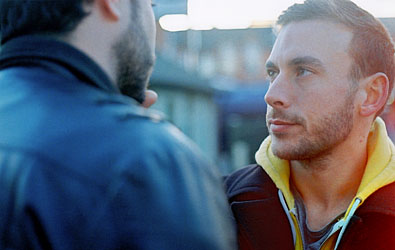
There are romances with repercussions that resonate for as long as we live. Said romances usually end before we are ready to give them up. Without us being aware of the fact that we are living something that will establish a "before and after" in our existence, we then discover we revisit these moments forever and they most likely will accompany us to our deathbed. Then, there are movies that deal with these romances. Movies like Casablanca, Lost in Translation, The Way We Were, Brief Encounter...all of which talk of love that was, love that is and love that will forever be. Like said romances, we also find ourselves revisiting these movies in our dreams more often than we'd like to. Can it be that we all harbor a secretly masochist hopeless romantic within? Or is it that real life never fulfills what art promised? Both could be answers that come to mind while watching Andrew Haigh's Weekend, this miniature masterpiece is a lovely exercise in style, execution and transcendence. The way in which the director enters the lives of two men who fall in love over a weekend, is nothing if not exceptional. Haigh has such eye for detail that we have to ask ourselves if this wasn't taken straight from one of his memories, watch how lived in the spaces feel, how effortlessly the actors live within these characters...the magic in Weekend is that it doesn't really feel like a movie, it feels like we're witnessing real life, things happening right in front of us. Where it could've been political, the film forgoes the dynamics of homosexuality and instead focuses on the complexities of humanity. Instead of concentrating on representing specific concepts and conceptions, the film aims to address our hearts without forgetting our minds. If you find yourself thinking about Weekend long after you've seen it, you will understand what the characters felt. The movie sometimes becomes too painful to watch, its simplicity bordering dangerously on docudrama without reducing itself to the tackiness of reality shows. However like a failed romance, there is much more to gain from the movie, than the idea of not having it in your life. To watch this movie is to witness love itself being invented. The precision of its storytelling, a reminder that like everything else, love too must fade. The dreamlike quality of its urban spaces an invitation for us to pursue it no matter what.