Showing posts with label Corey Stoll. Show all posts

Tuesday, March 20, 2012

(My) Best of 2011: Supporting Actor

5. Kiefer Sutherland in Melancholia

Lars von Trier's movies never seem to give space for his male actors to thrive. More often than not men are "pawns" of sorts in the larger scheme of the female driven universes created by the mad Dane. Just think of the fates of Willem Dafoe in Antichrist and Stellan Skarsgard in Breaking the Waves. Because it's often the women who give the most arresting performances in his movies, it seems that the men are a bit underrated and what he achieves with Kiefer Sutherland in Melancholia should by no means go by unnoticed. Playing the loyal husband of Claire (Charlotte Gainsbourg) he divides himself drastically in the movie's two chapters, in the first he has to play a strong head-of-the-house who tries to make his sister-in-law (Kirsten Dunst) understand that despite his affection for her, he is still the, literal, king of his castle. His strong charisma shifts in the latter chapter to give way to a man who quite simply loses all faith in the things that had supported him before: science and love. Watching his destruction parallel to the "larger" events going on might be all the more haunting because Sutherland never allows his character's limitations to prevent him from being completely unforgettable.

4. John Hawkes in Martha Marcy May Marlene

There is something so seductive about John Hawkes in this movie that defies all laws of attraction. Why would anyone want to be with someone who forces them into an alternative but violent cult, constantly rapes you, makes you fall in love with him and then not only ignores you but makes you aid him in finding new lovers? Yet somehow that's what he does as Patrick, in Sean Durkin's remarkable directorial debut. There is something so effortless about the way in which Hawkes movies in front of the camera, something so menacing about the way he looks when he smiles and yet we totally "get" why the title character (Elizabeth Olsen) can't stay away from him for long. This performance must be what they mean by "magnetic".
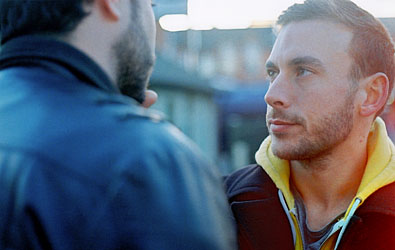
3. Chris New in Weekend

New is the epitome of alluring in Andrew Haigh's Weekend, what's so remarkable and fascinating about his character and his performance is how completely blasé he seems while harboring an explosive combination of emotions inside. His Glen seems like a free spirit, a bit on the politically incorrect side but the actor goes beyond the confines of the "bohemian" character's traits and finds something rather touching in him. The way in which Glen always seems to be both intensely interested in Russell (Tom Cullen) while wanting to run away, punches you right in the gut in the most unexpected moments. His line deliveries are magical and there's no way you would be able to say no to having him tape your sexual history. On a shallow note - which somehow adds to the constant wonderment of his performance - never expected him to be the top.

2. Bruce Greenwood in Meek's Cutoff

There is very little information on who Stephen Meek was exactly, yet what Bruce Greenwood does in Kelly Reichardt's revisionist western feels as if someone found a time machine and brought the legendary explorer back to life. Greenwood is practically unrecognizable behind the shaggy beard and oversized hat that Meek wears and his performance may lack the "excitement" associated with playing historical figures. Yet perhaps because the actor had a pretty much empty canvas to portray the character as he found fit, he comes up with a thing of true beauty, creating a harsh, soulless creature that demands your attention and always ends up winning your favor. No other performance in 2011 captured the "rock star"-ness of current politics like this one, he reminded us that we're living in a world where politicians need only but to charm us before we are willing to get lost in the labyrinth of their lies.

1. Corey Stoll in Midnight in Paris


It must be telling that while Woody Allen has abstained of tackling biopics or historical characters throughout his legendary career, several of his fictitious creations seem to take on a life of their own outside the realms of his movies. Try convincing people that Zelig wasn't a real being, that you can't find Emmet Ray albums in record stores or that Hannah and her sisters don't actually live somewhere in NYC... It was a real surprise then to see him explore some of the most famous artists of the 20th century in his enchanting Midnight in Paris, which not only resulted in the best movie he's done in over twenty years but also reminded us of the Woodsman's more playful side. Allen has always tried to represent and preserve his personal tastes through his movies and it makes sense that the ones in Paris are some of his all-time favorites, what's remarkable is how he manages to give them their own life while imprinting the Woody Allen touch on them. Best in show is Corey Stoll who fills the screen with testosterone and bravado playing none other than Ernest Hemingway. Even when he's reciting passages of Hemingway's life adjusted to the straightforward nature of his writing, Stoll gives the legend a suspicious earthy feeling. No scenes in the movie feel as alive as those that feature him and the way he always looks into the horizon as if both recalling specifics and planning his next masterpiece will certainly leave you wanting more.

Wednesday, August 31, 2011

Midnight in Paris ****


Director: Woody Allen
Cast: Owen Wilson, Rachel McAdams, Adrien Brody
Alison PillCarla Bruni-Sarkozy, Corey Stoll, Kathy Bates
Kurt Fuller, Léa Seydoux, Marion Cotillard
Mimi Kennedy, Tom Hiddleston

From its opening scene, Midnight in Paris establishes itself as a love song: we see how a series of shots of the city comprise a verse that thrills us because of its familiarity (ooh it's Notre Dame! ooh it's Place Vendome!) and despite its otherworldly beauty.
Paris is one of those cities that becomes universal because of the feelings they inspire even if you have never visited them. Tons of films have been set in Paris, tons of romances have been set there as well and to those less inclined by emotions, the French capital has also been the stage for some of the most revolutionary cultural movements in the world.
It makes absolute sense then, that Woody Allen would fall head over heels for it. Not since Manhattan had he shown such passion for a place as he does in this film. Structured like his iconic ode to New York City, Midnight in Paris is formed by a bookend in which we first develop the crush, a large plot development in which we suffer through the ups and downs of love and a final thought that reminds us, not only of our insignificance but about the immortality of beauty.
Throughout the film, Allen, aided by cinematographer Darius Khondji's breathtaking framing, reminds us that Paris will remain even after we're gone.
Take for example the scene in which we meet Gil Pender (Wilson), our protagonist. We hear him talking to his fiancee Inez (McAdams) about the beauty and romanticism of Paris but we can not see either of them. What we see instead is a huge pond filled with fragile water lilies. For a moment, we're not even sure if we're watching a painting or an actual real life image, Then Gil mentions something about Monet and our mind clicks, but so does the camera and we move to find ourselves in front of the people we're about to meet.
In several other scenes throughout the movie, first we see places and things and only then do the characters enter the scene. The camera is sometimes placed before them, as if suggesting the characters need to catch up with time - and wondering if they ever will be able to do it - and sometimes it seems to wander about trying to take in the riches of a city that's too overwhelming for a films's running time.
The subject of catching up with time might be the plot's biggest preoccupation, as Gil finds himself yearning to live in a different place as his writer's block increases. After working as a Hollywood hired hand- and being quite successful at it- he's trying out a novel for the first time. His trip to Paris is meant to inspire him but all he gets are insults from Inez and her parents (the pitch perfect Kennedy and Fuller).
Things get worse when they run into Paul (Sheen) and Carol (Arianda), two friends of Inez who tag along everywhere they go. He's a pseudo-intellectual who knows it all on the surface, she's the loving companion who nods at his every word.
Allen never has any problem revealing to us that the world that surrounds Gil (who in this film is the "Woody Allen character") is truly atrocious. As he usually does, he has no problem affirming that this is a misunderstood man, perhaps a bit too sensitive to be surrounded by the shrewd beings he knows. Allen has never been good at hiding his disdain for bourgeois apathy and while his characters are never exactly saints of any kind, he has always excelled at making us like them.
Gil for example seems to breathe by inertia, we're meant to dislike Inez (the things she says often make you gasp) but we're not supposed to be rooting for Gil just yet. He needs to earn our liking, he needs to achieve a breakthrough.
Woody provides him this opportunity by relying on a fantastical twist that resembles what he did in his brilliant The Purple Rose of Cairo, as in that occasion, everything happens so fast that we're unable to try and reason. Anyone who cared to deconstruct either movie by ways of physics and probability could probably accuse of them of being truly preposterous. During one scene Inez's mother describes a movie she saw as "infantile" and lacking in any believable qualities, but she doesn't deny it had charm (is she talking about the movie she's in?).
However Allen becomes the ultimate alchemist, turning the dullness of the quotidian into magic that defies the most complicated visual effects. Midnight in Paris gives him an opportunity to bask in his love for the Lost Generation and all things 20s, giving us glimpses of a city where you could run into characters the likes of Hemingway (a phenomenal, scene stealing Stoll), F. Scott Fitzgerald (Hiddleston) and Gertrude Stein (Bates) among others.
Leading us in this tour of a golden era is Marion Cotillard, playing the woman who captures Gil's heart. To reveal the many twists and turns in the movie would be to rob the audience of what can only be called utter pleasure. In the past Allen has expressed his love for classic things, however this might be the first time when he seems to find his voice through others.
While sometimes it might seem like a film meant for culture snobs (and what Allen movie isn't?) Midnight in Paris is also remarkable for its unaware passion for the arts. When Gil says to a character "you take art groupie to a whole new level" he might as well be talking about Allen and the movie.
It's no coincidence that the film seems to be based on the theory that places of great antiquity and history are forever plagued with the ghosts of those who once lived there. At many times during the film there are mentions of the main character in Gil's novel; a young man who owns a nostalgia shop, the places where you can buy old records and Shirley Temple memorabilia.
For some this is an enchanting concept (Cotillard's character is "hooked" by it) while others find it creepy and childish. "Nostalgia is denial" says Paul condescendingly, while Gil looks away finding himself in a place far away from judgment.
The movie toys with the possibility of transporting yourself to a time where everything can be perfect and Allen approaches his everlasting obsession with mortality in a way that makes the heart ache and puts a smile on your face.
We realize eventually that Allen is the shop vendor mentioned so much, he's the one always selling us nostalgia, whether it be his use of music, artistic references or the affected way in which his characters talk (the use of words like "pseudo-intellectual", "lovely" and "erotic" usually give his screenplays away).
Midnight in Paris can be read through countless layers, the magic of its ensemble alone is enough to warrant an essay but like the greatest art what's easiest to discuss, perhaps because it inspires excited, clumsy eloquence, is the feeling that it leaves you with: something that resembles the warmth of a good meal and the exhilarating joy of being in love.
After his last movie which failed to invite us into its dark world, in this one a character reminds Gil that a writer can not succumb to despair, his duty is to find an antidote to the emptiness of existence. Woody Allen seems to have taken this advice and Midnight in Paris is the kind of movie that reminds us that heaven might be a plane ride away.

Saturday, September 18, 2010

Salt **


Director: Phillip Noyce
Cast: Angelina Jolie, Liev Schreiber, Chiwetel Ejiofor
Daniel Olbrychski, August Diehl, Olek Krupa, Hunt Block, Corey Stoll

For about one third of its running time Salt is a damn good, almost spectacular, thriller. Then it's not.
Angelina Jolie plays Evelyn Salt, a CIA agent accused by a Russian defector (Olbrychski) of being a KGB sleeper agent sent decades before to accomplish a top secret mission ominously called "Day X" (i.e. complete world destruction).
Since this happens within the first minutes of the movie, the next hour and a half has Salt on the run, while agents played by Schrieber and Ejiofor pursue her. She goes all MacGyver and builds explosives with cleaning supplies, infiltrates top secret bunkers and thinks of her German arachnologist husband Mike (Diehl) while wearing fabulous ushankas.
The energy contained in the first part of the film is akin to J.J. Abrams superb spy series Alias, in how it builds a strong female character, hints at some heavy emotional background and provides her with badass qualities without ever reducing her to a mere male fantasy.
What goes wrong here is that director Noyce doesn't seem able to juggle every aspect of this character. He tries to make three different movies with her, one where Evelyn is a wrongfully accused woman trying to clear her name and save her husband (which gives Salt its only chance of having a heart), another where she is a fembot wreaking havoc wherever she struts. Plus another movie where she's an excuse to resurrect the Russians as America-hating villains often bordering on the ridiculous.
It's this movie that's the most troubling because its flirting with parody makes the others seem completely preposterous and incoherent.
Of course, nothing about Salt is supposed to make much sense and Jolie seems to be having a ball in the part. Besides making most of her amazing stunts her exotic beauty doesn't interfere with the insanity of the plot and we somehow still believe that someone like her would end up married to a complete nerd.
What the film fails to do is give Salt a soul and as Jolie travels seamlessly from genre to genre she does so with all the professionalism of an actor but none of the je ne sais quoi of a movie star.
For a star vehicle, this one's on automatic mode for way too long.